
By Texas Heart CPR Training Instructor Team, American Heart Association Aligned Training Site · · Updated · 14 min read
AHA BLS Instructor Course: What It Takes
The AHA BLS instructor course certifies you to teach Basic Life Support. Learn prerequisites, costs, and what the classroom day actually looks like.
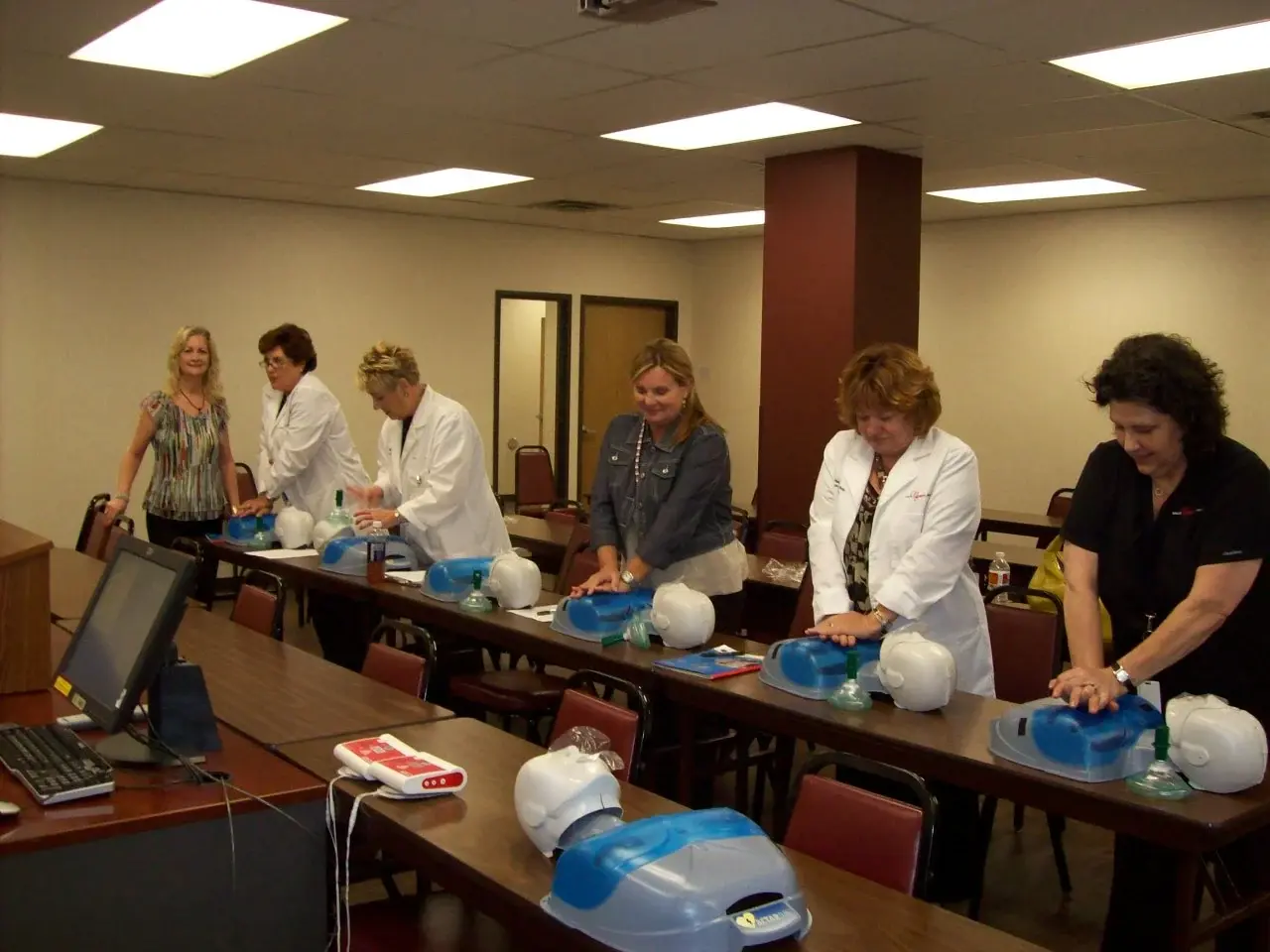
The AHA BLS instructor course is the American Heart Association's pathway to certifying you to teach Basic Life Support. At Texas Heart CPR Training - an AHA Certified Training Site with certified instructors - you will practice teaching on real PRESTAN manikins, complete the required Instructor Essentials course, and leave ready for your monitoring phase. The total time and money depend on your current certification, but you can expect the classroom portion to take a full day and cost between $500 and $700 when you add the AHA's online fee to the training center's classroom fee. You probably already know that healthcare providers trust AHA BLS more than any other CPR credential. The question is whether the instructor path fits your career, and what actually happens inside the room. This article walks through the prerequisites, the course day itself, the cost, the difference between a BLS instructor and a CPR instructor, and the steps you take after the course to start teaching.
Key Takeaways- The AHA BLS instructor course certifies you to teach Basic Life Support to healthcare providers and students.- You need a current AHA BLS Provider eCard and the online Instructor Essentials module before the classroom day.- Total cost typically runs $500 - $700, including the AHA's online fee and the training center's classroom session.- After the course, you align with a Training Center and complete one monitored class to start teaching.- Texas Heart CPR Training has trained more than 77,654 students since 2009[1] and holds current American Heart Association Certified Training Site status.
What Is the AHA BLS Instructor Course?
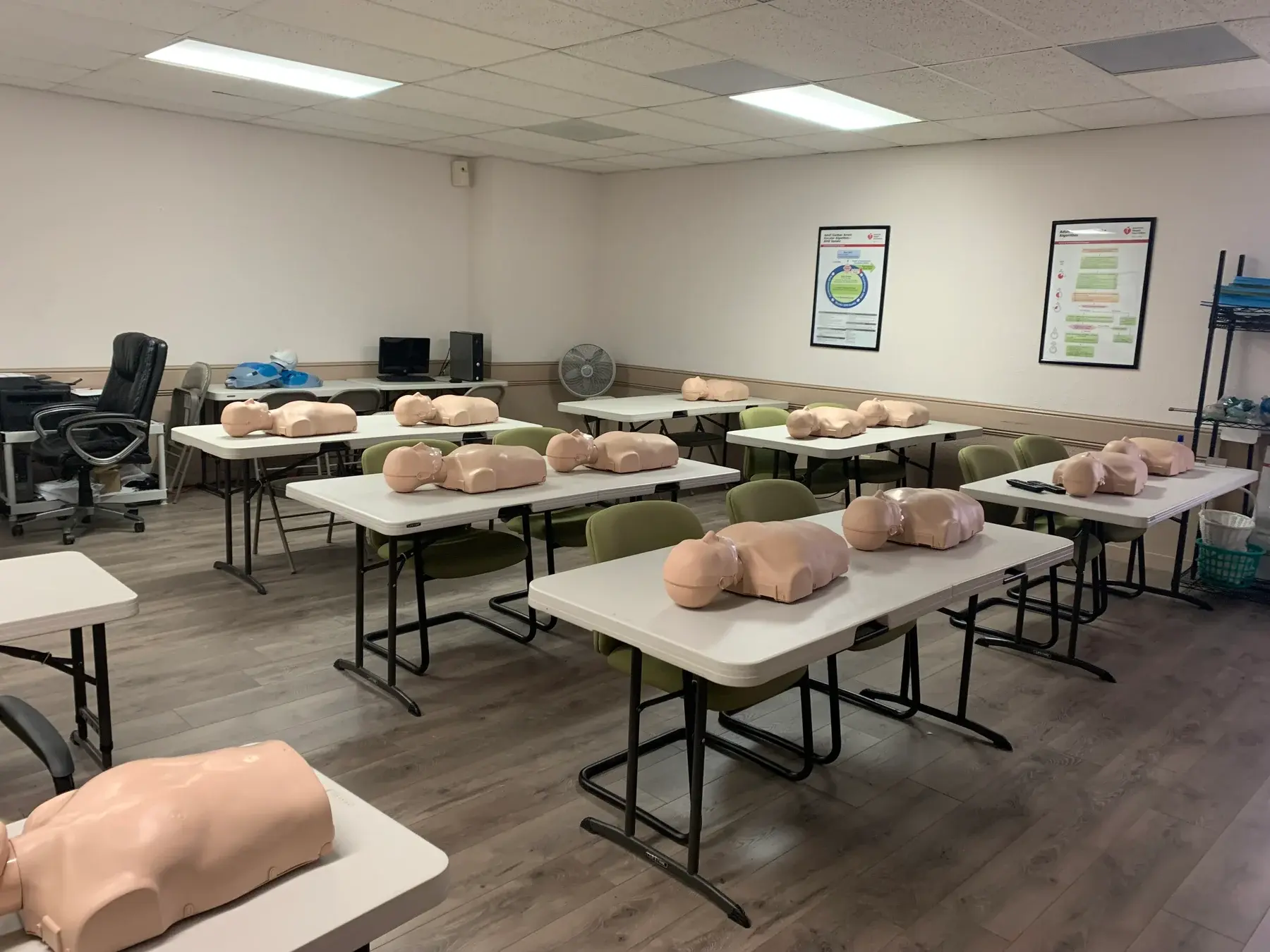
The AHA BLS instructor course is the official American Heart Association program that takes a current BLS provider and trains them to teach BLS to others. You are not just reviewing the science. You are learning how to run a classroom, correct a student's chest compression depth on a manikin in real time. Deliver the course so a new provider can perform in a real emergency the way they did in your class. Texas Heart CPR Training has held American Heart Association Certified Training Site status since 2009. Every instructor on staff is a certified AHA instructor who has coached thousands of students through this same material.
The course itself has two parts. First, you complete the AHA's BLS Instructor Essentials online module at your own pace. That covers the administrative structure, the chain of survival, and the science of high-quality CPR. Then you attend a hands-on classroom session with an AHA Training Center Faculty member. In that session, you practice teaching BLS skills on manikins, run through the written exam, and complete a monitored teaching scenario. When you finish, you receive a BLS instructor certificate that is valid for two years.
Here is what the AHA BLS instructor course actually certifies you to do:
- Teach the AHA BLS Provider course to healthcare professionals and students
- Conduct BLS skills testing sessions for providers who completed the online HeartCode BLS
- Issue AHA BLS eCards that are valid for two years and accepted by many hospitals, clinics, and nursing programs - confirm with your employer that they accept the AHA credential
- Renew your own BLS provider status while you teach
Our instructor team holds both American Heart Association and American Safety and Health Institute certifications. That dual credential matters because it means we teach the instructor course the same way we teach every BLS provider class: with the depth that comes from training both healthcare and workplace responders across Dallas-Fort Worth since 2009.
Who Can Take the BLS Instructor Course? (Prerequisites)
You do not need to be a medical professional to become a BLS instructor. That is one of the biggest misconceptions we hear at the Plano training center. The AHA requires a current BLS provider card and completion of the BLS Instructor Essentials online course. You also need alignment with an AHA Training Center. Your day job can be anything from a nursing student to a construction safety manager who wants to train crews on-site.
Here are the concrete prerequisites:
- A current, non-expired AHA BLS Provider eCard
- Completion of the AHA BLS Instructor Essentials online course (purchased separately through the AHA)
- A score of at least 84% on the BLS Instructor Essentials written exam[2]
- Acceptance and alignment with an AHA Training Center, which will monitor your first teaching session
James D. came to our Plano center in April 2026 for his BLS Provider course and described the instructor as friendly, helpful, informative, and thorough. He was a healthcare professional renewing his card, but the same course is the starting point for a teacher, a coach, or a parent who wants to become an instructor. The prerequisite is the BLS provider credential itself, not a specific job title. Body strength matters more than age for effective compressions, and the AHA sets no mandatory minimum age to learn or teach CPR.
Our instructors are certified by both the American Heart Association and the American Safety and Health Institute. That means when you train with us, you learn from people who teach across the full range of AHA and ASHI courses every week. The Texas Heart CPR Training Instructor Team is made up of licensed American Heart Association and ASHI CPR instructors who have taught hands-on BLS, CPR, AED, First Aid, ACLS. PALS classes across Plano, Dallas, and Fort Worth since 2009.
If you or your students need Spanish-language provider training first, our guide to CPR certification in Spanish covers in-person classes across DFW.
What Happens During the BLS Instructor Essentials Course?
The classroom day is where the online module turns into real teaching ability. You arrive with the online portion finished and the written exam passed. The instructor - a Training Center Faculty member - starts by reviewing the course structure and the administrative steps you will follow when you run your own class. Then you move to the manikins.
The courseware and the written exam
Before the classroom day, you complete the AHA BLS Instructor Essentials online module at your own pace. The module covers the chain of survival, the science of high-quality CPR, and the AHA's Program Administration Manual. You must score at least 84% on the written exam to attend the classroom session[2]. The faculty instructor confirms your completion certificate when you arrive.
Practice teaching on manikins
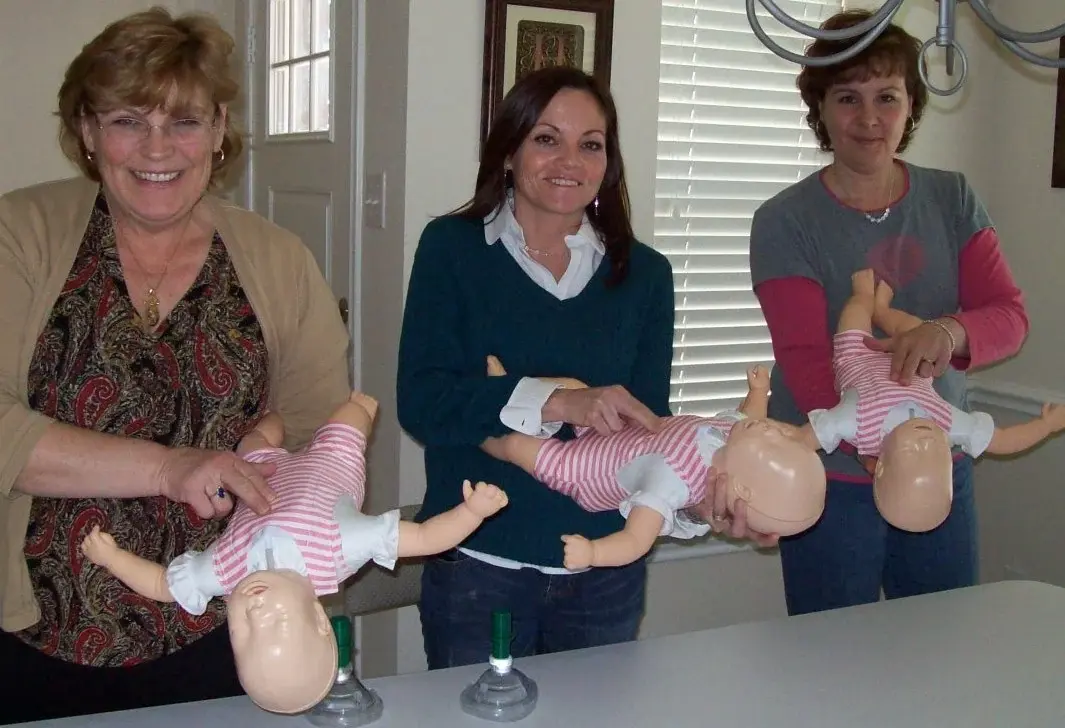
This is the core of the day. You take turns on PRESTAN adult and infant manikins, delivering BLS skills while the instructor evaluates your technique. More importantly, the instructor evaluates your ability to coach someone else. The PRESTAN manikins give real-time feedback on compression depth and rate. That is the same feedback your future students will see. You teach a short BLS segment - adult CPR with an AED, for example - to the instructor and your classmates. The faculty member watches how you explain hand placement. They watch how you correct a compression that is too shallow. They watch whether you can keep the room moving without losing anyone.
The exit skills check
You complete a monitored teaching scenario that covers the full BLS sequence. The faculty instructor debriefs you on what went well and what to adjust before your first monitored class with real students. When you pass, you receive your BLS instructor certificate.
Corin took his AHA BLS Provider course with instructor Linda at our Plano location and wrote that Linda "made sure to explain everything backwards and forwards when it came to the information we really needed to know." That is exactly the standard we expect from every candidate who goes through the AHA BLS instructor course. It is the standard our faculty instructors model during the classroom day. Sherry Mehring, another BLS student, said the instructor "taught with the firm authority and gravitas that these situations deserve but was also kind in delivery." You will practice striking that same balance when you teach your practice session.
Jennifer R. took her very first CPR class at our Plano location on K Avenue. In her Google review she highlighted how respectfully and politely Ms. Floyd greeted the class from the first interaction through the end of the session. That is the kind of classroom presence we expect every instructor candidate to develop. Texas Heart CPR Training has trained more than 77,654 students since 2009[1]. Every one of those students practiced on their own manikin with direct instructor feedback. The instructor course uses the same equipment and the same expectation: you leave ready to run a class, not just to pass a test. Our instructors hold both AHA and ASHI certifications, so the faculty member running your classroom day brings the perspective of someone who teaches across the full certification spectrum. As an American Heart Association Aligned Training Site and an American Safety and Health Institute Certified Training Site, we run instructor courses the same way we run every provider class: with the depth that comes from training both healthcare and workplace responders across Dallas-Fort Worth since 2009.
BLS Instructor vs. CPR (Heartsaver) Instructor: Which Path Fits You?
The biggest source of confusion is who each credential actually lets you teach. A BLS instructor teaches healthcare providers. A CPR instructor - the AHA calls it a Heartsaver instructor - teaches workplace responders, teachers, coaches, daycare staff, and everyday people.
Factor | BLS Instructor | CPR (Heartsaver) Instructor |
|---|---|---|
Who you teach | Healthcare professionals, nursing students, EMTs, dental staff | Teachers, coaches, construction crews, childcare providers, community members |
The credential | AHA BLS Provider card | AHA Heartsaver First Aid / CPR / AED card or ASHI First Aid with CPR / AED card |
Compliance need | Hospital, clinic, and nursing program requirement | OSHA and workplace compliance; USCG compliance for maritime crews |
Course content | Single-rescuer and team CPR, bag-mask ventilation, AED use, choking relief | Adult, child, and infant CPR with AED, plus basic first aid |
Instructor prerequisite | Current AHA BLS Provider card | Current AHA Heartsaver Provider card or equivalent |
Best fit if | You work in or near healthcare and want to train clinical staff | You train workplace safety teams, school staff, or community groups |
Healthcare providers need AHA BLS. That is the accepted standard. Most other people - teachers, coaches, construction crews, daycare staff - need an ASHI First Aid with CPR/AED certification for OSHA compliance. Rosalee Chan needed the CPR/AED with First Aid certification required by the sports facility where she coaches. She scheduled and paid for the class online and completed the hands-on training at our Plano center. That is the Heartsaver path in action. Both paths are valuable, and some instructors hold both credentials so they can serve every client who calls. If you are not sure which one fits your situation, ask the facility or employer that requires your card which specific certification they accept.
As an American Heart Association Certified Training Site and an American Safety and Health Institute Certified Training Site, Texas Heart CPR Training can align and support instructors on either path. Our instructor team holds both credentials, so we can guide you toward the one that matches the students you want to teach.
How Much Does the BLS Instructor Course Cost?
The total cost typically runs between $500 and $700 when you add the AHA's online module fee to the classroom session fee at your training center. The AHA charges for the BLS Instructor Essentials online course and the instructor manual. The training center charges for the classroom day and the faculty instructor's time.
Cost Component | Typical Range | What Moves It |
|---|---|---|
AHA BLS Instructor Essentials online course | $35 - $40 | Fixed AHA fee |
AHA BLS Instructor manual (digital or print) | $50 - $75 | Digital vs. print; purchased through ShopCPR |
Classroom session fee (training center) | $400 - $600 | Training center location, faculty instructor availability, included materials |
Total estimated cost | $500 - $700 | Bundled packages sometimes reduce the classroom fee |
Texas Heart CPR Training posts its pricing for related courses as a reference point. The ACLS Initial course is $250, the Renewal is $200, and the Skills Test is $100. BLS instructor classroom fees are set separately because the faculty instructor time and the manikin-to-candidate ratio drive the cost. Contact our Plano center at 214-592-7088 for the current BLS instructor classroom fee and available dates. You can also view our full course list and schedule to see what other classes are available while you wait for your instructor session.
How Alignment and Monitoring Work After the Course
Finishing the classroom day does not make you an independent instructor yet. You must align with an AHA Training Center, and that Training Center must monitor you teaching your first BLS class with real students. This is the step that turns your instructor certificate into an active teaching credential.
Here is how the process works:
- Align with an AHA Training Center. Texas Heart CPR Training is an American Heart Association Aligned Training Site. We can accept new instructors into our alignment and provide the monitoring they need. You choose a Training Center, sign an alignment agreement, and receive access to the AHA's Instructor Network.
- Schedule your monitored class. You teach a full BLS Provider course while a Training Center Faculty member observes. The monitor evaluates your instructional technique, your adherence to AHA curriculum, your manikin coaching, and your administrative steps.
- Receive full instructor status. When the monitor signs off, your Training Center activates your instructor status in the AHA system. You can now issue AHA BLS eCards and teach independently.
- Start teaching. You can run classes at the Training Center's facility, or - once you are established - arrange on-site classes at businesses, clinics, schools, and churches. Texas Heart CPR Training provides on-site group CPR, First Aid, BLS, and ACLS classes across the Dallas-Fort Worth metroplex for groups as small as nine students.
Most new instructors we align want to train their own workplace colleagues. Many run their first on-site classes within weeks of completing their monitoring session at our Plano center on K Avenue. The monitoring step is not a hurdle. It is the bridge between knowing the material and being trusted to certify someone else. Our instructors hold both American Heart Association and American Safety and Health Institute certifications, so the faculty member who monitors you brings the perspective of someone who teaches across the full certification spectrum. The Texas Heart CPR Training Instructor Team is made up of licensed American Heart Association and ASHI CPR instructors who have taught hands-on BLS, CPR, AED, First Aid, ACLS. PALS classes across Plano, Dallas, and Fort Worth since 2009.
For a deeper look at the full instructor certification path, read our guide on AHA CPR instructor certification in 2026.
How to Renew Your BLS Instructor Status
Your BLS instructor certification is valid for two years, and the renewal process is straightforward. You teach at least four BLS classes during your two-year certification period. You also complete the AHA's online instructor renewal module before your expiration date. Your Training Center reviews your teaching record and renews your status.
Here is what the renewal requires:
- Teach a minimum of four AHA BLS Provider courses within the two-year certification window
- Complete the AHA BLS Instructor Renewal online module
- Maintain a current AHA BLS Provider eCard
- Receive a monitoring visit from your Training Center Faculty if your Teaching Center requires one
Kim has been returning to Texas Heart CPR Training for her CPR certification renewals for six years. She names instructor Kaela as the best instructor she has had and plans to return when her card is next due. Rids, another repeat student over six years, says the class is quick, efficient, and covers all the essential hands-on CPR techniques without wasting time. That kind of loyalty comes from instructors who keep their own credentials current and their teaching sharp. Renewal is not just an administrative box. It is how you stay the instructor students come back to. Our instructors hold both American Heart Association and American Safety and Health Institute certifications, so the faculty member who monitors your renewal brings the perspective of someone who teaches across the full certification spectrum.
If you are exploring the instructor path for the first time, our AHA CPR instructor certification guide covers the full process from provider to instructor.
Frequently asked questions
Can a nursing student or new EMT become a BLS instructor?
Yes. A nursing student or new EMT can become a BLS instructor as long as they hold a current AHA BLS Provider eCard and complete the BLS Instructor Essentials course. You do not need a completed degree or a job offer. The AHA requires the provider credential and the instructor training, not a specific career stage. Many nursing students pursue the instructor credential while still in school because it strengthens their resume and lets them teach CPR during clinical rotations or summer breaks.
How long is BLS instructor certification valid?
Your BLS instructor certification is valid for two years. You must renew before the expiration date on your instructor card, which requires teaching at least four BLS classes during the certification period and completing the AHA's online renewal module. Your aligned Training Center handles the renewal paperwork and verifies your teaching record.
Do I need to be a medical professional to take BLS?
No. Anyone can take a BLS Provider course and earn their BLS card. The course is required for most healthcare professionals, but it is open to any person who wants to learn high-quality CPR with a bag-mask and AED. Body strength matters more than age for effective compressions, and the AHA sets no mandatory minimum age.
Which CPR class do I need?
Healthcare providers need AHA BLS. Teachers, coaches, construction crews, daycare staff, and most other workplace responders need an ASHI First Aid with CPR/AED certification for OSHA compliance. Confirm with your employer or facility which specific card they accept before you register. Texas Heart CPR Training offers both paths and can help you choose the right class.
Are your courses accredited and approved within the industry?
Yes. Texas Heart CPR Training is an American Heart Association Certified Training Site and an American Safety and Health Institute Certified Training Site. Our instructors hold current AHA and ASHI certifications. AHA BLS is the accepted healthcare standard, and ASHI First Aid with CPR/AED meets OSHA and USCG compliance requirements.
The AHA BLS instructor course is the fastest path to teaching the credential that hospitals and nursing programs trust most. You need a current BLS card, the online Instructor Essentials module, and a classroom day where you practice teaching on real manikins with a faculty instructor. After alignment and one monitored class, you can issue AHA eCards and run your own courses. The total investment typically runs between $500 and $700, and the credential is valid for two years with a renewal that depends on teaching at least four classes. If you are ready to start, the first step is confirming your BLS provider status and finding a Training Center that can align and monitor you. Texas Heart CPR Training has been doing exactly that since 2009, across three DFW training centers and on-site at businesses throughout the metroplex.
Book your BLS instructor classroom session at our Plano center, or call 214-592-7088 to ask about alignment and available dates. Book Your Class Now.