
By Texas Heart CPR Training Instructor Team, American Heart Association Aligned Training Site · · 15 min read
How Often Do Teachers Do CPR Training? Texas Guide
How often do teachers do CPR training in Texas? Renew every two years. AHA Heartsaver or BLS classes in Plano, Dallas, and Fort Worth with same-day eCards.
Teachers in Texas typically renew their CPR certification every two years. The exact frequency depends on your school district's policy, but American Heart Association and ASHI certification cards are valid for two years from the date you finish the class. So how often do teachers do CPR training? Every other year, in most cases. This guide covers the state requirements, which course fits your role, and exactly how to schedule your renewal at our Plano, Dallas, or Fort Worth training centers.
You already know that a medical emergency does not wait for a convenient moment. What you may not know is that most school districts in DFW follow the two-year expiration cycle written right on the card. Missing that window can pull you out of compliance before the next in-service day. We have helped more than 77,654 students stay current since 2009[1], and the path is simpler than most teachers think.
By the end of this article, you will know which certification your campus actually requires, how to check your district's policy, and the fastest way to get a same-day eCard that your administration will accept.
Key Takeaways- CPR certification for teachers is valid for two years, and most Texas districts require renewal on that cycle.- Classroom teachers usually need AHA Heartsaver or ASHI First Aid with CPR/AED, not BLS.- Coaches, PE teachers, and early childhood staff often need First Aid bundled with CPR/AED.- We offer same-day eCards at our Plano, Dallas, and Fort Worth centers, plus on-site classes for groups of nine or more.- We send email and text reminders 30 days before your card expires, so you get a reminder before your renewal deadline.
How Often Do Teachers Do CPR Training?
CPR certification for teachers is valid for two years. The American Heart Association and the American Safety and Health Institute both issue cards that expire two years after the class date. School districts across Texas align their compliance checks with that expiration cycle, so the practical answer to how often do teachers do CPR training is every other year.
A two-year cycle is not an arbitrary rule. CPR guidelines change as resuscitation science improves, and hands-on skills fade without practice. The two-year renewal window keeps providers current on the latest compression rates, ventilation ratios, and AED usage before the next guideline shift arrives. For a teacher, that currency matters: immediate CPR can double or triple a cardiac arrest victim's chance of survival[2], and 73.4% of out-of-hospital cardiac arrests happen at home[3], where the person giving CPR is often a family member, not a paramedic.
We have taught CPR to teachers, coaches, and school staff across DFW since 2009[1]. Our instructor team is made up of licensed American Heart Association and ASHI instructors who coach each student on their own PRESTAN feedback manikin. In that time, the single biggest compliance headache we see is a lapsed card discovered the week before school starts. The fix is straightforward once you know what your district requires.
The Core Answer at a Glance
- Certification cards from the American Heart Association and ASHI expire two years after the class date.
- Most Texas school districts require current CPR certification as a condition of employment or coaching eligibility.
- The Texas Education Agency sets a baseline, but local district policy determines which specific course is required.
- Teachers who coach, teach PE, or work in early childhood education often need additional First Aid or pediatric endorsements.
- Renewal takes about three hours in person, and you leave with a same-day eCard.
Texas Education Agency CPR Requirements for Teachers
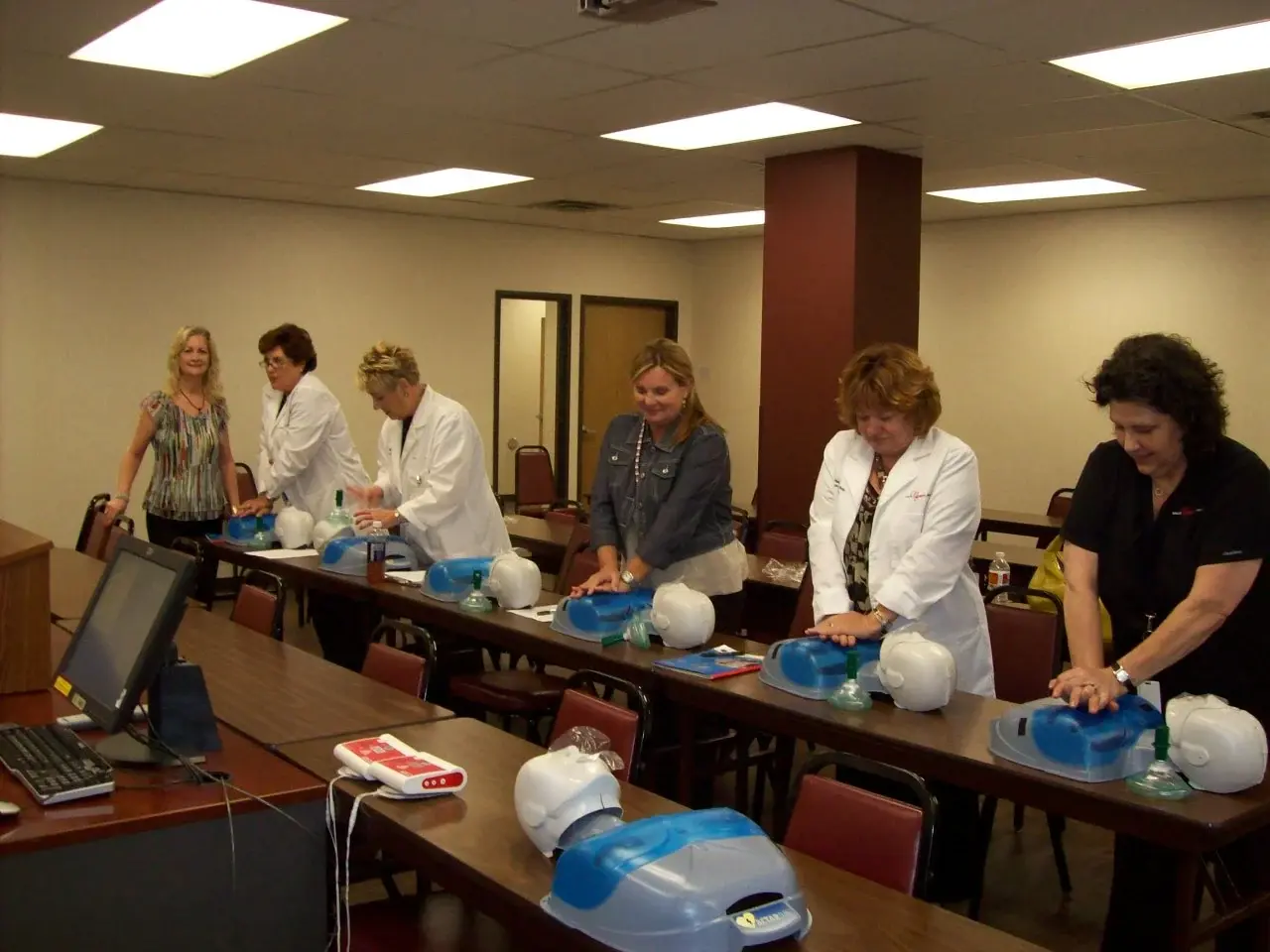
The Texas Education Agency requires CPR instruction as part of the health curriculum for students, but TEA does not issue a blanket mandate that every classroom teacher hold a personal CPR card. The requirement that affects most teachers comes from their local school board or district policy. That policy almost always references a nationally accredited certification - AHA or ASHI - that meets OSHA standards for workplace responders.
Where TEA does set a clear expectation is in specific roles. Coaches, physical education teachers, marching band directors, and staff who supervise extracurricular athletics commonly must hold current CPR and First Aid certification under district policy. Many districts extend that requirement to all campus staff designated as first responders during a medical emergency. If your campus emergency action plan lists you as a responder, your district likely requires a valid CPR card.
We hold an OSHA-compliant CPR and First Aid certification through ASHI, which satisfies the workplace safety standards most Texas districts adopt. For a teacher who is not in a healthcare pathway, the ASHI First Aid with CPR/AED course is the most direct route to compliance. For a teacher who is also a licensed healthcare provider - a school nurse, an athletic trainer, a health science instructor - the AHA BLS Provider card is the expected standard.
A clear decision tree resolves the confusion:
- Are you a nurse, athletic trainer, or health science teacher? You need AHA BLS for Healthcare Providers.
- Are you a classroom teacher, coach, PE teacher, or daycare worker? You need ASHI First Aid with CPR/AED or AHA Heartsaver, depending on your district's policy.
- Are you an early childhood educator or foster care provider? You need Pediatric First Aid/CPR/AED.
We have walked more than 77,654 students through this exact decision since 2009[1]. The first question we ask every teacher who calls is, "What did your principal or compliance officer tell you they need to see on the card?"
Renewal Frequency: Why CPR Cards Are Valid for Two Years
The two-year expiration date printed on your CPR card is not a suggestion. It is the interval the American Heart Association and ASHI have determined keeps a lay rescuer's skills sharp enough to perform under stress. After two years, compression depth, rate, and hand placement degrade measurably without a hands-on refresher.
We see the two-year rhythm play out in our own classroom every week. Kim and Rids are two teachers who have returned to our Plano center for their CPR renewal every two years for six years running. Rids wrote that the class is "quick, efficient, and covers all the essential hands-on CPR techniques without wasting any time." Kim named instructor Kaela as the best she has had and plans to return when her card is next due. That kind of loyalty is not about a checkbox. It is about a class that respects a teacher's time and delivers a card the district accepts.
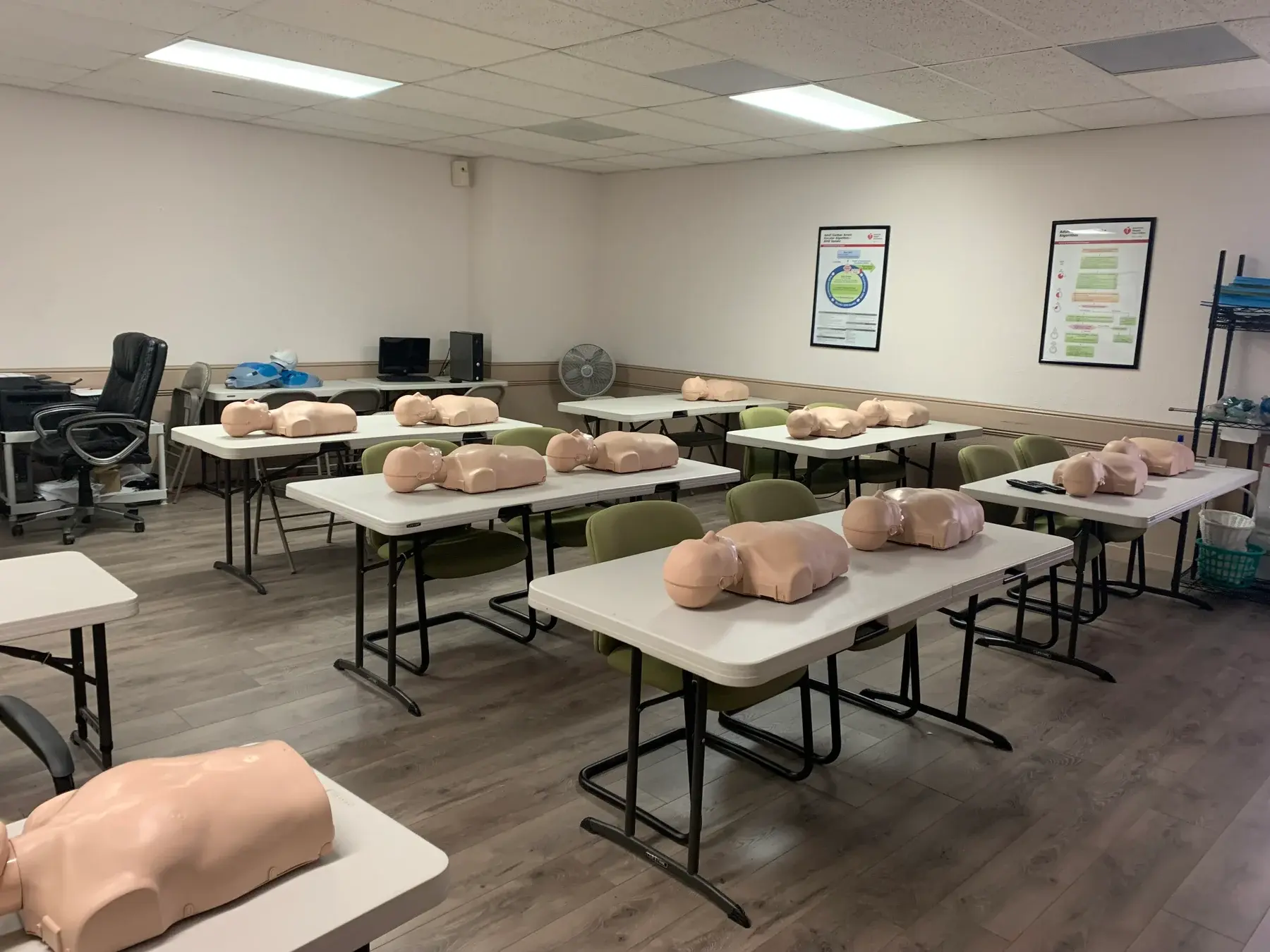
Our instructor team is made up of licensed American Heart Association and ASHI instructors who have taught hands-on BLS, CPR, AED, First Aid, ACLS and PALS classes across Plano, Dallas and Fort Worth since 2009. Every student practices on their own PRESTAN feedback manikin, so the compression depth and rate you learn in class are the same ones you will use in a real emergency.
When you renew on a consistent two-year cycle, you also avoid the last-minute scramble. We send email and text reminders 30 days before your card expires, so you can schedule your renewal class before your compliance window closes. For a teacher whose card lapsed over summer break, we offer same-day reservations and a same-day eCard so you can walk into your next in-service day with a current certification.
What Type of CPR Certification Do Teachers Need: Heartsaver vs. BLS?
The choice between AHA Heartsaver and AHA BLS is the most common fork in the road for Texas teachers. Picking the wrong one can mean your district rejects the card. The difference is straightforward once you look at your role.
Feature | AHA Heartsaver CPR/AED | AHA BLS Provider |
|---|---|---|
Who it is for | Teachers, coaches, childcare staff, camp counselors, workplace responders | Healthcare providers, nursing students, EMTs, athletic trainers, school nurses |
Content | Adult, child, and infant CPR; AED use; choking relief | High-quality CPR for adults, children, and infants; AED use; bag-mask ventilation; team dynamics |
Certification length | About 3 hours in person | About 3 hours in person |
Card validity | 2 years | 2 years |
Cost at our center | Call for current pricing | $60 (AHA CPR/BLS Provider) |
OSHA compliance | Yes | Yes, for healthcare settings |
We are an American Heart Association Certified Training Site and an American Safety and Health Institute Certified Training Site. That means the cards we issue carry the same accreditation your district's compliance officer looks for, whether you take Heartsaver or BLS.
The Coach and PE Teacher Pathway
Coaches and physical education teachers usually need First Aid bundled with CPR/AED. Rosalee Chan, a youth sports coach in Plano, needed exactly that combination to satisfy the facility where she coaches. She booked our ASHI First Aid with CPR/AED class online, completed the hands-on training at our Plano center, and left with the certification her employer required. She later wrote, "I took the CPR/AED with First Aid training to get the certification required by the sports facility that I coach at."
If your district or facility asks for "CPR and First Aid," the ASHI First Aid with CPR/AED course meets OSHA and USCG compliance needs in one session. Call 214-592-7088 for current pricing. If they specify "American Heart Association," the AHA Heartsaver First Aid/CPR/AED course is the equivalent.
The Early Childhood Educator Pathway
For teachers and staff in pre-K, daycare, and foster care settings, the Pediatric First Aid/CPR/AED class is the targeted course. It covers infant and child CPR, AED use, and pediatric first aid on dedicated manikins sized for small bodies. The course runs about three hours. Call 214-592-7088 for current pricing. We teach it at all three DFW centers and can bring it to your campus for groups of nine or more.
Texas School District CPR Policies: What to Check in DFW
School district policies in the Dallas-Fort Worth area are not uniform. Plano ISD, Dallas ISD, and Fort Worth ISD each set their own CPR requirements for teachers, coaches, and staff. Charter and private schools often follow a different playbook entirely.
Before you book a class, confirm three things with your campus compliance officer:
- Which certifying body does the district accept? Most accept AHA; some also accept ASHI. A few private and charter schools accept either, but you need to ask.
- Does your role require First Aid in addition to CPR/AED? Coaches, PE teachers, and early childhood staff almost always do.
- Does the district accept blended learning (online coursework plus an in-person skills check)? Some do; some require the full classroom course.
We operate three training centers - in Plano, Dallas, and Fort Worth - and we deliver on-site classes in more than 40 surrounding cities across the DFW metroplex[4]. That reach means a teacher in McKinney, a coach in Arlington, and a daycare director in Frisco can all get the same AHA or ASHI certification without driving to a single location.
Our instructor team is made up of licensed American Heart Association and ASHI instructors, and we hold an OSHA-compliant CPR and First Aid certification through ASHI. That OSHA compliance is the standard most Texas districts adopt for workplace responders, so the card we issue matches what your school's policy requires.
The most common worry we hear is, "Will my card be accepted?" The answer is that acceptance depends on the facility, and the safest move is to confirm with your employer before class. We work with schools and facilities to make sure the card we issue matches what their policy requires.
School Staff CPR Training Requirements in DFW Districts
School staff CPR training requirements vary by district. Plano ISD, Dallas ISD, and Fort Worth ISD each set their own rules for which staff must hold a current card and which certifying body they accept. The three-question checklist above - which body, First Aid or not, blended or full classroom - is the fastest way to get a clear answer from your compliance officer. Once you have that answer, call us at 214-592-7088 and we will match you to the right course.
Charter and Private School Requirements
Charter and private schools in DFW set their own CPR policies. Some follow the same AHA or ASHI standard as public districts. Others accept a broader range of certifications. The only way to know is to ask your school's compliance officer directly: "Which certifying body do you accept, and does my role require First Aid?" We can then match you to the right course.
Custom Scheduling Around In-Service Days and Summer Break
Most teachers renew during the summer or on an in-service day. We run classes Monday through Saturday, 7:00 a.m. to 7:00 p.m., so you can book a session that fits your school calendar. If your card expires mid-year, we offer same-day reservations. You can walk out with a current eCard before your next class period.
On-Site CPR Training for Schools: Bring Certification to Your Campus
For a principal or athletic director who needs to certify an entire faculty or coaching staff, sending everyone to a training center one at a time is inefficient. Our on-site group training service brings the same AHA and ASHI courses directly to your school, clinic, or church, built around your schedule.
Here is how a typical on-site certification day works with us:
- Choose your course and count your staff. Determine whether you need BLS, Heartsaver, or First Aid/CPR/AED, and count how many staff members need certification. We require a minimum of nine students for BLS and First Aid on-site classes, or five for ACLS.
- Pick a date and time that fits your operations. We run on-site classes Monday through Saturday, 7:00 a.m. to 7:00 p.m. Schools often schedule us on an in-service day, a teacher workday, or an early-release afternoon so the class does not interrupt instructional time.
- We bring the equipment to you. Every student gets their own PRESTAN CPR manikin with real-time feedback on compression depth and rate. No sharing manikins, no watching from the back of the room.
- Your staff leaves with a same-day eCard. Each participant finishes the class with a certification card emailed the same day, valid for two years.
Jennifer R., a first-time CPR student, took her class at our Plano center on K Avenue and highlighted how respectfully and politely the instructor greeted the class from the first interaction through the end of the session. That same instructor-led, hands-on experience is what we deliver on your campus.
Our instructor team is made up of licensed American Heart Association and ASHI instructors who have taught hands-on BLS, CPR, AED, First Aid, ACLS and PALS classes across Plano, Dallas and Fort Worth since 2009. When we come to your school, the same certified instructors who teach at our centers run the class.
On-site classes need a minimum of nine students for BLS and First Aid. Call 214-592-7088 or email us with the date, time, and location, and we handle the rest.
How to Renew Your Teacher CPR Certification at Texas Heart CPR Training
Renewing your CPR card at our Plano, Dallas, or Fort Worth center takes about three hours and ends with a same-day eCard in your inbox. We are an American Heart Association Certified Training Site and an ASHI Certified Training Site, staffed by certified instructors who have taught hands-on CPR across DFW since 2009.
Our Plano training center at 2600 K Avenue holds a 4.8-star rating from 147 Google reviews[5]. Corin, who took the AHA BLS Provider course with instructor Linda, wrote that Linda "explained everything backwards and forwards when it came to the information we really needed to know." Sherry Mehring, another BLS student, described the teaching style this way: "She taught with the firm authority & gravitas that these situations deserve BUT was also kind in delivery." That combination of thorough, plain-language instruction and respectful authority is what we deliver in every class.
You have two renewal paths:
- Full classroom course. Register online, attend the in-person session, and leave with your eCard. BLS Provider is $60 and runs just over three hours. For Heartsaver First Aid/CPR/AED pricing, call 214-592-7088.
- Blended learning. Complete the online portion at your own pace. The HeartCode BLS online course costs $37, paid to the AHA. Then come to our center for the hands-on skills test, which costs $40. You get the same AHA BLS certification card, valid for two years.
We track your card expiration and send email and text reminders 30 days before it lapses, so you get a reminder before your renewal deadline.
Before You Renew: A Quick Checklist
- Confirm with your campus which certification they require (AHA BLS, AHA Heartsaver, or ASHI First Aid/CPR/AED).
- Check whether your role requires First Aid in addition to CPR/AED.
- Decide whether the full classroom course or the blended learning path fits your schedule.
- If your card has already expired, book a same-day reservation - we can get you in the same week.
- If you are certifying a group of nine or more, call us about an on-site class at your school.
Schedule your renewal class now.
If you are still deciding which course fits your role, read our guide on how to schedule your CPR class in DFW. For teachers who want to go further and become instructors themselves, see what it takes to complete the AHA BLS instructor course or our guide to the AHA CPR instructor course in DFW. Need the class in Spanish? See our guide to CPR certification in Spanish in DFW. Ready to book? See class times at our Plano training center.
Frequently asked questions
How long is CPR certification valid for teachers in Texas?
CPR certification for teachers is valid for two years from the date of the class. Both American Heart Association and ASHI cards expire two years after completion. Most Texas school districts require current, non-expired certification as a condition of employment for coaches, PE teachers, and designated campus responders.
Do teachers need BLS or Heartsaver CPR certification?
Most classroom teachers need AHA Heartsaver or ASHI First Aid with CPR/AED, not BLS. BLS is the standard for healthcare providers - school nurses, athletic trainers, and health science instructors. Coaches and PE teachers often need First Aid bundled with CPR/AED. Confirm with your district before booking.
Can I use an online-only CPR card for my teaching job?
No. Fully online CPR courses that do not include an in-person hands-on skills check are not accepted by most Texas school districts. Your certification must come from an accredited provider like the American Heart Association or ASHI and include a hands-on skills session with an instructor. Blended learning - online coursework plus an in-person skills test at a training center - is accepted by many districts and results in the same certification card. The hands-on test matters because it lets an instructor verify your compression depth and rate on a PRESTAN feedback manikin, which an online module cannot do.
Does every CPR class include AED training for teachers?
Yes. Every CPR certification class at Texas Heart CPR Training includes AED training. Not all providers teach how to operate an automated external defibrillator, but AED use is part of every AHA and ASHI course we offer, from Heartsaver through BLS.
Do you hold on-site CPR classes at schools in the DFW area?
Yes. We deliver on-site group CPR, First Aid, BLS, and ACLS training at schools, clinics, churches, and businesses across the DFW metroplex. On-site classes require a minimum of nine students for BLS and First Aid. Call 214-592-7088 or email us with your date, time, and location.
Is there a minimum age for a student to learn CPR, and can teachers get certified if they are not medical professionals?
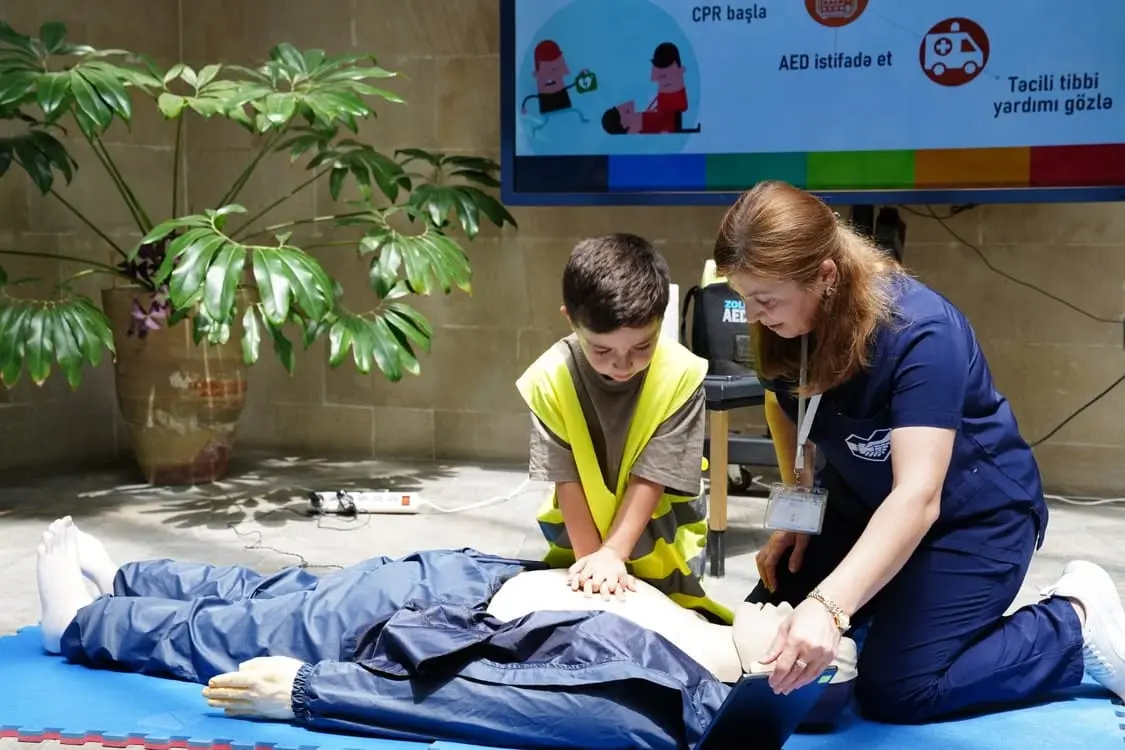
The American Heart Association does not mandate a minimum age for learning CPR. Body strength matters more than age, and children as young as nine can learn and retain CPR skills. Teachers do not need to be medical professionals to take any CPR or BLS class - anyone can enroll, regardless of career or background.
How long does a teacher CPR class take?
A full classroom CPR class runs about three hours in person. The blended-learning path is shorter at the training center. You complete the online coursework at your own pace, then come in for a hands-on skills test that takes less than an hour. Both paths give you the same two-year certification card.
What happens if my CPR certification expires?
If your card has already expired, you are no longer in compliance with your district's policy. Book a same-day reservation at our Plano, Dallas, or Fort Worth center. We can often get you in the same week, and you leave with a same-day eCard. We also send email and text reminders 30 days before your card expires so you can renew before the deadline.
Knowing how often do teachers do CPR training is the first step. The next is booking a class that fits your district's requirements and your schedule. Our Plano, Dallas, and Fort Worth centers run classes Monday through Saturday, and we can bring the training to your campus when you have a group of nine or more. Book your class now.