
By Texas Heart CPR Training Instructor Team, American Heart Association Aligned Training Site · · 11 min read
AHA CPR Instructor Certification: A 2026 Guide
A step-by-step guide to earning your AHA CPR instructor certification, with real costs, timelines, and what alignment with a training site involves.
Becoming an American Heart Association (AHA) CPR instructor means completing the Instructor Essentials course, aligning with an AHA Training Site, and being monitored teaching your first class. At Texas Heart CPR Training, an American Heart Association Certified Training Site that has taught over 77,654 students since 2009, we see new instructors walk this path every month. The process is clear, but the details most guides skip are the ones that determine whether you actually start teaching.
You may have heard the aha cpr instructor certification is a quick weekend course. That is only part of the story. The real work is aligning with a training site that schedules your classes and monitors your first session. We will give you the exact steps, the honest costs, and what the first monitored class feels like from the training site's side of the table.
Key Takeaways- An aha cpr instructor certification lets you teach AHA Heartsaver and BLS courses after completing the Instructor Essentials course and being monitored.- Total upfront cost varies by discipline and whether your provider card is current; the biggest variable is the hands-on classroom session fee set by your aligned training site.- You must align with an AHA Training Site like Texas Heart CPR Training, an American Heart Association Certified Training Site, to get your first class scheduled and monitored.- BLS and Heartsaver are separate instructor certifications; which one you choose dictates whether you can teach healthcare providers or workplace responders.
What Is an AHA CPR Instructor Certification?
An aha cpr instructor certification is the credential that authorizes you to teach American Heart Association CPR, AED, and first aid courses. It is not a provider card. A provider card proves you can perform CPR. An instructor card proves you can train others to perform it, run a classroom, and evaluate skills on manikins like the PRESTAN feedback units we use in our Plano, Dallas, and Fort Worth centers.
This certification is backed by the American Heart Association’s science and curriculum. As an American Heart Association Certified Training Site, Texas Heart CPR Training operates under AHA program standards. Our instructors are Certified Instructors @ American Heart Association, and every class they teach follows the same guidelines a new instructor candidate must master. The credential is valid for two years and must be renewed through continued teaching and monitoring.
How Do I Become an AHA CPR Instructor? (The 5 Steps)
The path to an aha cpr instructor certification follows five steps. We have watched hundreds of candidates move through them at our Plano training center on K Avenue. Here is the exact sequence.
- Hold a current AHA BLS Provider certification. You cannot enter the instructor course without a valid provider card. If yours is expired, schedule a BLS Provider renewal class first. In our Plano center, a BLS Provider course runs about three hours.
- Complete the AHA Instructor Essentials course. This is the online, self-paced portion. You purchase it through the AHA’s ShopCPR portal[1]. It covers course organization, skill-testing protocols, and the administrative rules for issuing eCards.
- Align with an AHA Training Center or Training Site. This is the step most candidates overlook. You need a training site that will accept your alignment, schedule your first class, and provide a monitoring instructor. Texas Heart CPR Training is an American Heart Association Aligned Training Site, and we align new instructors who complete their classroom portion with us.
- Pass your course exit and skills check. After the online work, you attend a hands-on session at your aligned site. An AHA Training Center Faculty member watches you teach a segment and run a skills station. You demonstrate CPR on a manikin and show you can correct student errors in real time.
- Get monitored teaching your first class. Once you pass the skills check, you are issued a provisional instructor card. Your first real class is monitored by an experienced instructor from your aligned site. That monitor signs off, and your full instructor status is activated.
Instructor Linda, one of our AHA-certified instructors in Plano, is the kind of person who monitors that first class. Corin, a student who took her BLS Provider course, wrote that Linda “explained everything backwards and forwards when it came to the information we really needed to know.” That is the standard a new instructor is held to during monitoring. You are not just demonstrating skills. You are showing you can teach with the clarity Linda brings to every session.
We have trained more than 77,654 students since 2009[2], and every one of our instructors was once in the same chair you are considering. The monitoring step is not a formality. It is where you learn to run a room.
How Much Does It Cost to Become an AHA CPR Instructor?
The total cost to earn your aha cpr instructor certification depends on which discipline you choose and whether your provider card is current. The biggest variable is the hands-on classroom session fee set by your aligned training site. Here is a realistic breakdown of the expenses you will encounter.
Expense | Notes |
|---|---|
AHA BLS Provider course (if needed) | A 3-hour in-person class at our Plano center. |
Instructor Essentials online course | Purchased directly from the AHA ShopCPR portal[1]. |
Classroom hands-on session | Paid to your aligned training site; varies by discipline. |
Instructor manual and materials | Digital or print; the BLS Instructor Package is available through ShopCPR[3]. |
Alignment or monitoring fee | Some sites charge a separate monitoring fee; some bundle it. |
ACLS or PALS add-on (optional) | For initial provider-level instructor courses; renewal courses cost less. |
At Texas Heart CPR Training, we are also an American Safety & Health Institute (ASHI) instructor site, which means we can discuss both AHA and ASHI instructor pathways. The ASHI route has a different cost structure, but for those who need OSHA-compliant workplace cards, it is worth comparing. The numbers above reflect the AHA path only.
How Much Do AHA Instructors Make?
AHA instructor pay in the Dallas-Fort Worth area varies by how you teach. Most new instructors start by teaching at the site where they aligned, either as an employee or as an independent contractor. Your earnings grow with the number of classes you teach and the range of certifications you hold.
A training site with multiple locations gives you more class slots. Texas Heart CPR Training runs classes across 3 DFW training centers in Plano, Dallas, and Fort Worth, plus on-site classes in 40+ surrounding cities. An instructor who can cover two or three of those locations fills a calendar faster than one tied to a single room.
Kim, a repeat student at our Plano center, has been coming back for her two-year CPR renewal for six years. She wrote, "Kaela was awesome. Kaela, by far has been the best instructor. Thank you so much. Hopefully we will see you in 2 years." Instructors who build that kind of loyalty see their classes fill by word of mouth. Earnings grow when students return and bring colleagues.
We are also an American Safety & Health Institute (ASHI) instructor site. Instructors who add ASHI First Aid with CPR/AED to their teaching scope can pick up OSHA-compliance classes for construction crews, coaches, and daycare staff. That diversifies your schedule beyond hospital shifts.
BLS Instructor vs. CPR Instructor: Which Certification Lets You Teach What?
This is the decision that trips up most candidates. The AHA offers two distinct instructor paths, and the aha cpr instructor certification you choose dictates your classroom audience.
Instructor Certification | Courses You Can Teach | Typical Audience |
|---|---|---|
BLS Instructor | BLS Provider, BLS Renewal, HeartCode BLS skills tests | Healthcare providers, nursing students, EMTs, hospital staff |
Heartsaver Instructor | Heartsaver CPR/AED, Heartsaver First Aid, Heartsaver Pediatric | Teachers, coaches, construction crews, childcare workers, foster parents |
Healthcare providers need AHA BLS. That is the accepted standard. Most other people, including teachers, coaches, construction crews, and daycare staff, need ASHI First Aid with CPR/AED for OSHA compliance. We answer the "Which CPR class do I need?" question every day at our front desk, and the same logic applies to which instructor path you choose.
Rosalee Chan, a youth sports coach in Plano, came to us needing the CPR/AED with First Aid certification required by the facility where she coaches. She took the ASHI First Aid with CPR/AED class. If her instructor had only held a BLS instructor card, that class could not have happened. Choosing the Heartsaver or ASHI path opens a different student base, one that is not tied to hospital shift schedules.
As an American Heart Association Aligned Training Site, we align new instructors on both tracks. The BLS path feeds the healthcare pipeline. The Heartsaver and ASHI paths serve the workplaces, schools, and sports facilities across Plano, Dallas, and Fort Worth.
Inside an AHA-Aligned DFW Training Site: What New Instructors Actually Experience
Most guides stop at the steps. None of them tell you what alignment actually feels like. Here is what happens when you walk into our Plano training center at 2600 K Avenue.
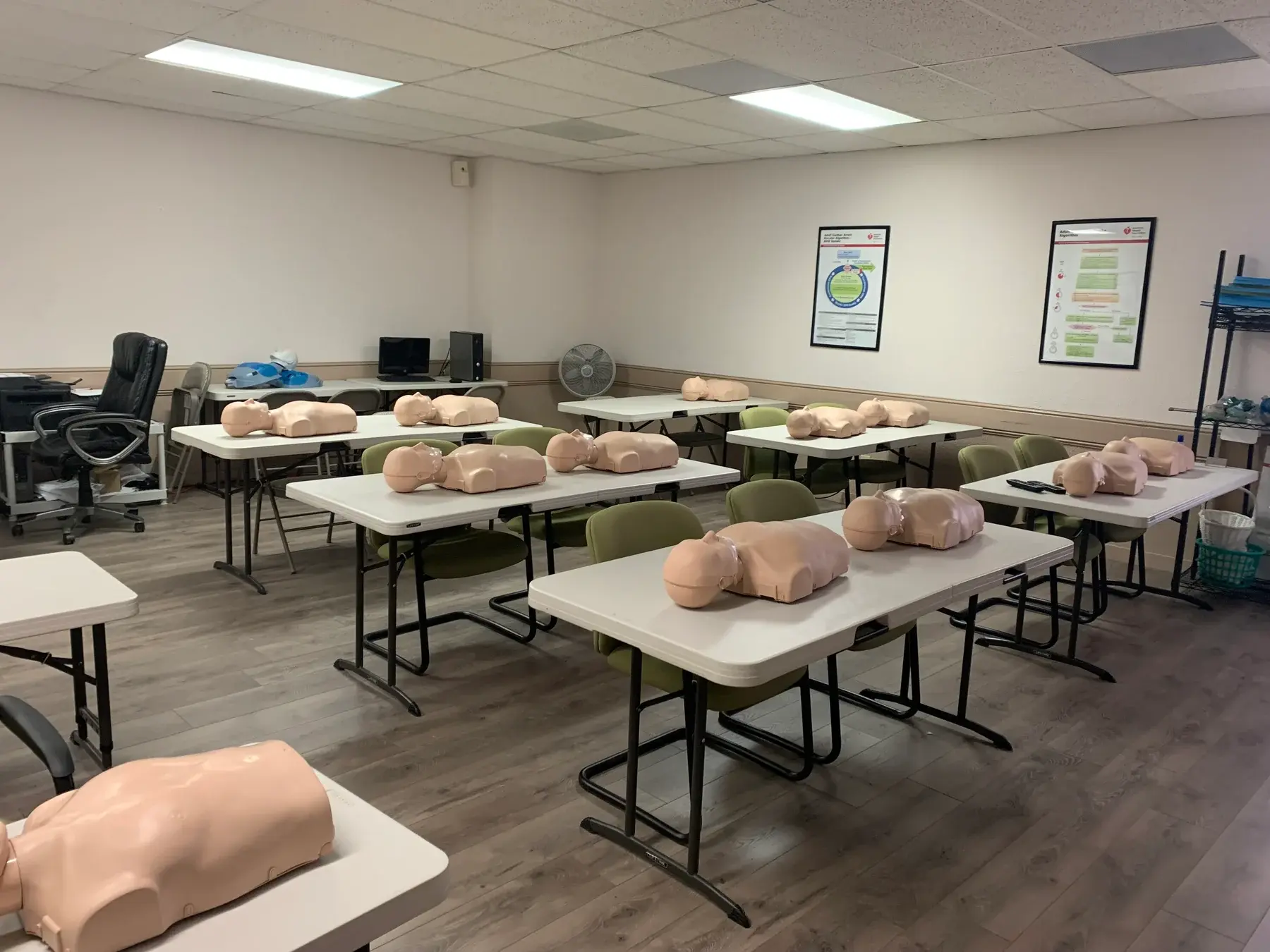
You arrive to a classroom with individual PRESTAN CPR manikins already set at each station. These are feedback manikins that give students real-time guidance on their compression technique. New instructors practice reading those feedback indicators while coaching a student. That is the skill the monitoring instructor watches most closely. You are not just checking a box. You are learning to see what a good compression looks like on a screen and what it looks like on a chest.
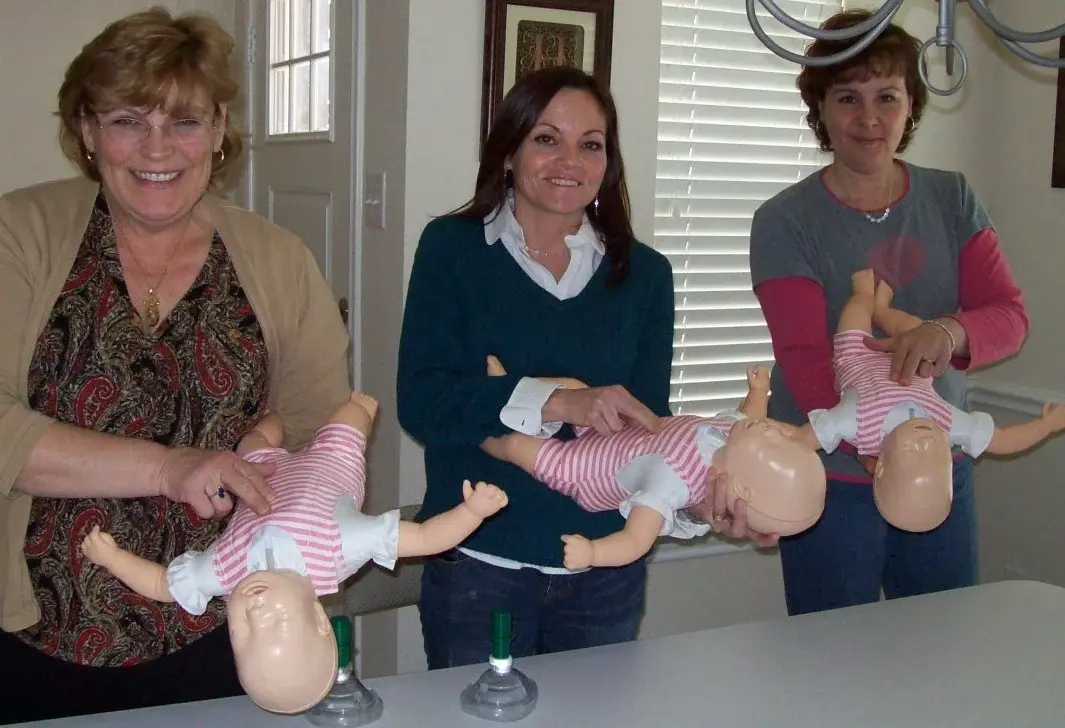
We also keep dedicated infant manikins on hand. Parents and childcare providers who take our Pediatric First Aid/CPR/AED class need to practice on a manikin that feels like a real infant, not a scaled-down adult torso. A new instructor who can run an infant CPR station confidently is an instructor we can schedule for more classes.
Jennifer R. took her first CPR class at our Plano location on K Avenue. She highlighted how respectfully and politely Ms. Floyd greeted the class from the first interaction through the end of the session. That tone is part of the monitoring. The AHA curriculum is the skeleton. How you greet a nervous first-time student is the muscle. Our Plano center holds a 4.8-star rating from 147 Google reviews[4]. New instructors who align here learn that the rating is built one class at a time.
Sherry Mehring, another student, described an instructor who "met you at where you were at" and "taught with the firm authority and gravitas that these situations deserve but was also kind in delivery." That balance is what the monitoring instructor is looking for. Authority without warmth loses a room. Warmth without authority loses the skill.
James D. completed his American Heart Association BLS Provider course at our Plano training center on April 2, 2026. He described the instructor as friendly, helpful, informative, and thorough, and said he would recommend the location to his colleagues. That is the standard a new instructor is monitored against: not just passing a test, but earning a recommendation from a working healthcare professional.
Keeping Your Instructor Status: Renewal, Monitoring and Coursework
An aha cpr instructor certification is not a one-time achievement. It requires ongoing teaching and periodic monitoring.
- Teach at least four classes every two years. The AHA requires documented teaching activity to maintain your instructor card.
- Complete a renewal course before your card expires. Instructor cards are valid for two years, matching the provider card cycle.
- Undergo periodic monitoring. Your aligned training site will observe a class and file a monitoring report with the AHA.
- Stay current on curriculum updates. The AHA releases science updates periodically. Instructor updates follow each cycle.
Rids, a student who has returned to our Plano center for six years, wrote that "the class is quick, efficient, and covers all the essential hands-on CPR techniques without wasting any time." An instructor who teaches that efficiently for six years has gone through multiple renewal cycles. The process becomes routine, but the monitoring keeps the quality consistent.
Texas Heart CPR Training is an American Heart Association Aligned Training Site. We handle the monitoring and renewal paperwork for our aligned instructors. You do not chase down a Training Center Faculty member on your own. Our instructor team is made up of licensed American Heart Association and ASHI instructors who have taught hands-on BLS, CPR, AED, First Aid, ACLS, and PALS classes across Plano, Dallas, and Fort Worth since 2009.
Frequently asked questions
Do I need a medical background to become an AHA instructor?
No medical background is required. Anyone with a current AHA BLS Provider card can enter the Instructor Essentials course. The curriculum teaches you the classroom management and skill-evaluation techniques you need. Many of our best instructors came from coaching, teaching, or construction supervision, not healthcare.
Is AHA CPR a certification?
The term “AHA CPR” usually refers to a provider-level completion card, not a professional instructor certification. An aha cpr instructor certification is the separate credential that authorizes you to teach AHA courses and issue provider cards. Both are valid for two years.
How much does it cost to become an AHA CPR instructor?
The total cost depends on which discipline you choose and whether your provider card is current. The biggest variable is the hands-on classroom session fee set by your aligned training site. Adding ACLS or PALS instructor certification costs more.
How much do AHA instructors make?
In the DFW area, pay varies by how you teach. Most new instructors start by teaching at the site where they aligned, either as an employee or as an independent contractor. Earnings depend on how many classes you teach and the range of certifications you hold.
Which CPR class do I need to take first?
Healthcare providers need AHA BLS. Most other professionals, including teachers, coaches, construction crews, and daycare staff, need ASHI First Aid with CPR/AED for OSHA compliance. Confirm with your employer before enrolling.
Will my certification card be accepted by my employer or facility?
AHA BLS is the accepted healthcare standard. Acceptance depends on the specific facility. Texas Heart CPR Training works with employers to confirm the card meets their requirements. Always verify with your employer before class.
Before you decide
- Confirm your current BLS Provider card is active. An expired card adds a step to your timeline.
- Decide between the BLS Instructor and Heartsaver Instructor path based on the audience you want to teach.
- Contact a training site early. Alignment availability can delay your first class by weeks if you wait.
- Ask the site about their monitoring process. A site that bundles monitoring into alignment saves you a separate fee.
- Check whether the site teaches on feedback manikins. Practicing on PRESTAN units prepares you for the monitoring session.
Earning an aha cpr instructor certification is a structured path. The steps are not complicated, but the details around alignment, cost, and the first monitored class are what separate a candidate who finishes from one who stalls. At Texas Heart CPR Training, we have guided new instructors through this process since 2009, from the online coursework to the moment they hand a student their first eCard. If you are ready to start, the next step is a conversation about which instructor path fits your goals.